Kurt Shaw: Polarization and Encounter in Contemporary Brazilian Politics

Long known for an ethic of hospitality and the virtue of the “cordial man,” Brazil has come to rival the United States for the fury and animus of its political polarization. How has Brazilian public opinion — so hopeful and unified only a decade and a half ago, turned to the rage and division one sees in a variety of political movements?

The conversation on polarization concludes with the seeds of hope, showing how afro-Brazilian and indigenous ideas of conflict as productive can offer a pathway to dialogue, and how traditions of making art together — in carnaval, in samba, music, and  sport — may provide new opportunities for overcoming polarization.

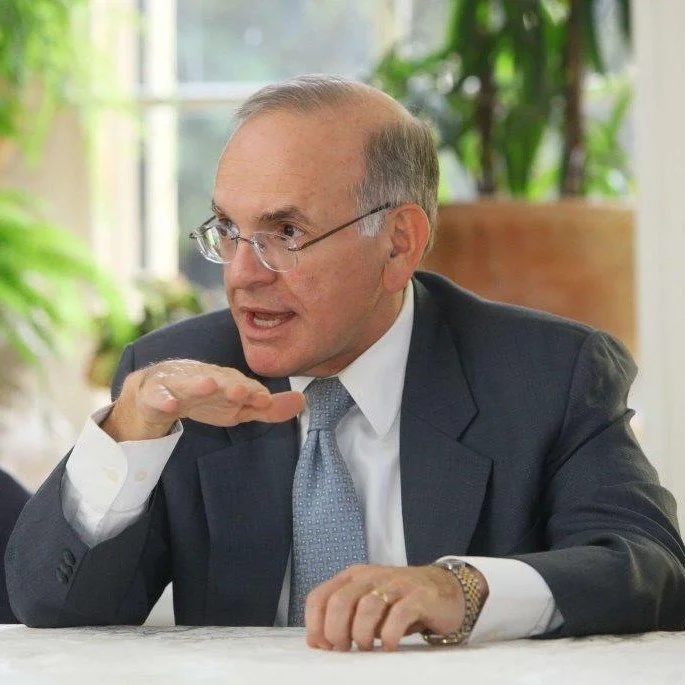
Kurt Shaw studied philosophy at Williams and classics at Harvard, but his real education came from two years in Central American refugee camps and Colombian slums, where he found poor and marginalized people more compelling thinkers than many academic philosophers. 

He developed the world’s largest network of grass-roots organizations serving street kids, work that contributed to the dramatic reduction in the number of children living on the streets of Latin American cities. Seeing the power of collaborative film-making with children, Shaw and co-director Rita da Silva directed the first feature film made entirely by ex-child soldiers, produced an indigenous telenovela in Bolivia, and directed the first fictional film in the Amazonian Tukano language. Their The Princess in the Alleyway, won best film of 2017 by the Subversive Cinema Society and their 2019 documentary The Other Side of the Other spent two years on rotation on Brazilian public TV.

Shaw has published many academic and journalistic articles, two novels, and seven academic books on topics ranging from political philosophy to Amazonian epidemiology, as well as producing hip-hop and pop albums. He has won a Fulbright, the Harvard First Decade Award, The Freedom to Create Prize, and the United Nations Intercultural Innovation Award. In 2022, he was awarded an Academic Visitorship at Oxford University. Over the last decade, his research has examined the roots of Brazilian political polarization in the history of Portuguese colonization, slavery, and Brazil’s complicated relationship with race, wealth, and culture, based on hundreds of interviews and dozens of films with Brazilians from all walks of life.

Debak Das: Nuclear Agreements with Russia and Iran, and International Control of Weapons of Mass Destruction

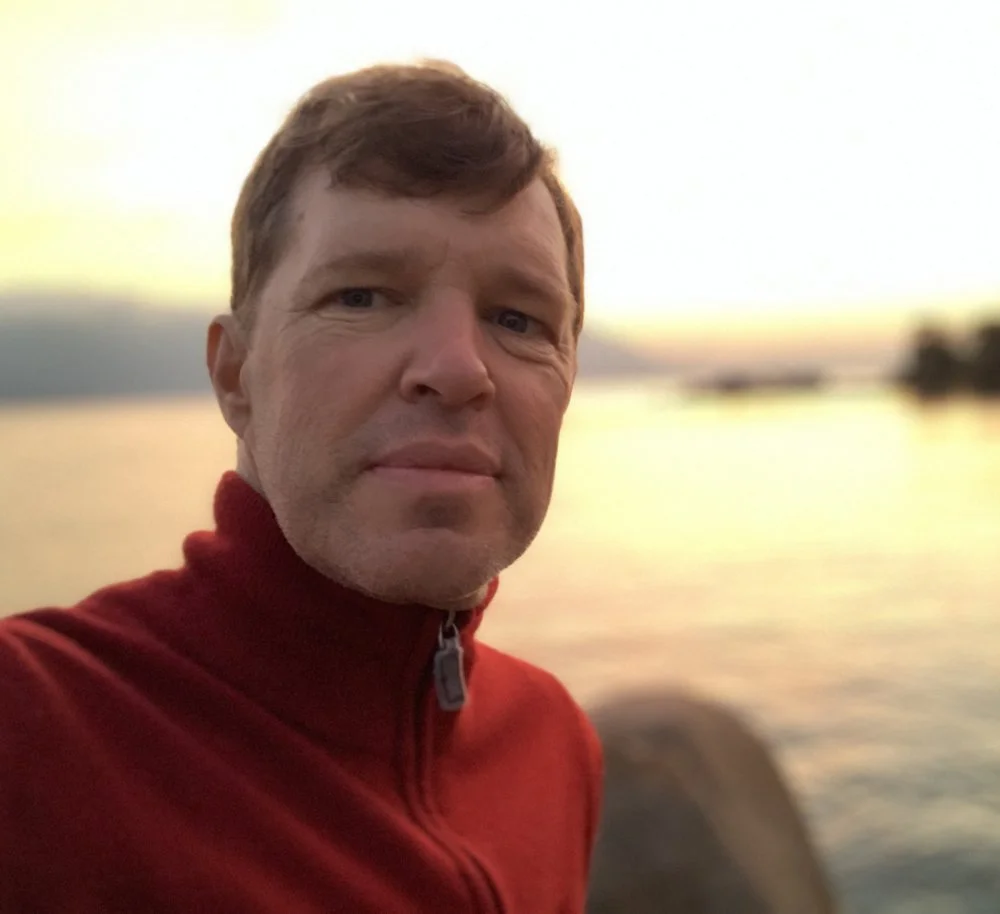
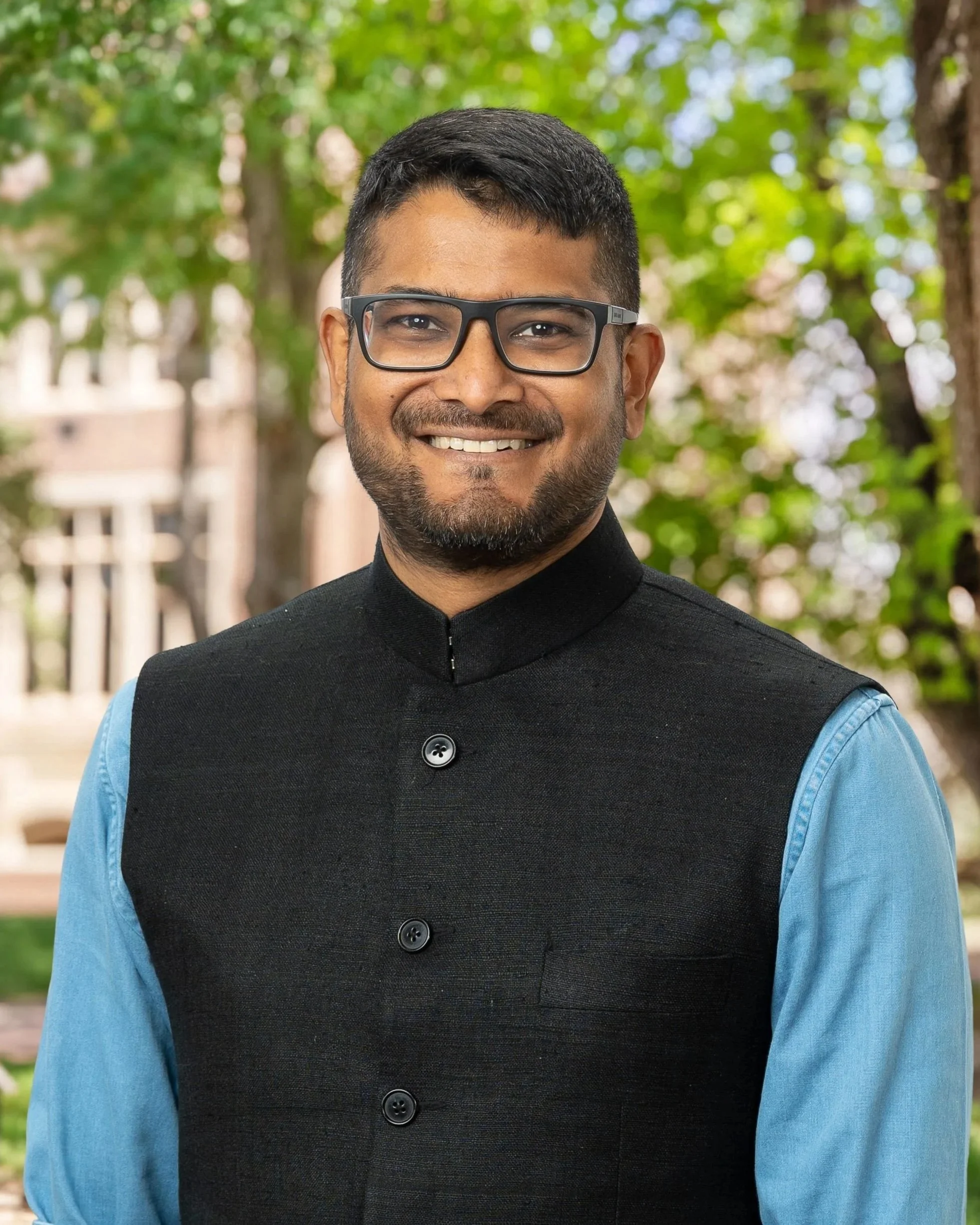
Debak Das is an Assistant Professor in Peace and Security at the Josef Korbel School of Global and Public Affairs at the University of Denver. His research lies at the intersection of international security, nuclear proliferation, crises, and international history with a focus on the nuclear non-proliferation regime and the politics of nuclear delivery systems. Das is a Director at the Bridging the Gap project that seeks to promote engagement between the scholarly, policy and public spheres and inform debate and policymaking on global challenges. He is also an affiliate at the Center for International Security and Cooperation (CISAC) at Stanford University, the Centre de Recherche Internationales (CERI) at Sciences Po, Paris, and the Council for Strategic and Defense Research (CSDR), New Delhi.

Professor Das has been published in the Bulletin of the Atomic Scientists, Global Studies Quarterly, Foreign Policy, H-Diplo Robert Jervis International Security Studies Forum, International Studies Review, Lawfare, Political Science Quarterly, Research and Politics, Security Studies, Texas National Security Review, The Washington Post, and War on the Rocks. His research has also been generously supported by the MacArthur Foundation, the Stanton Foundation, the Wilson Center, Judith Reppy Institute for Peace and Conflict Studies, Cornell University’s Graduate School, the Cornell Institute for European Studies, and the Chateaubriand Fellowship.

Robert Egger: Founder of DC Central Kitchen

Robert Egger is lifelong “power of food” champion, and the originator of the Community Kitchen movement. Currently, he is a member of the inaugural cohort of the U.S. State Department’s Culinary Corp. In addition, he is the founder of the DC Central Kitchen, the Campus Kitchen Project, and the L.A. Kitchen. He is also a Founding Board Member of The World Central Kitchen with Jose Andres.Collectively, these organizations have produced over 400 million meals and helped thousands of individuals attain foodservice jobs. He was also the founding Chair of the Washington, DC Mayor’s Commission on Nutrition, and Street Sense (Washington’s homeless newspaper).

On the national stage, Robert was the Co-Convener of the first Nonprofit Congress, and the Founder of CFoward, which advocated for the recognition of the economic role that nonprofits play in every community. A constant innovator, open-source advocate and thought leader, he wrote, “Begging for Change”, which won the Alliance for Nonprofit Management’s McAdams Prize in 2004 for its advancement of the nonprofit sector.

Robert is an international speaker, who has received dozens of acknowledgments over the years for his ideas and work, including being honored with a Lifetime Achievement Award by the Washington Restaurant Association, being named a Point of Light by President H.W. Bush, an Oprah Angel, and the James Beard Foundation’s Humanitarian of the Year. He was also the only direct service provider to appear on the Nonprofit Times list of the Most Powerful & Influential Nonprofit Leaders from 2006-2009. And finally, Robert is a 15-gallon blood donor with the American Red Cross. 

Ambassador Christopher Hill: US Diplomacy Today

American diplomacy is taking a new posture under the Trump Administration, with the State Department laying off employees and moving away from traditional foreign policy positions like international aid.

Ambassador Christopher R. Hill is a professional American diplomat who has served under seven presidents since entering the U.S. Foreign Service in 1977.  Hill is a five-time ambassador across multiple regions in Senate-confirmed positions, including as ambassador to Iraq, the Republic of Korea, Poland, North Macedonia and most recently to the Republic of Serbia until January 2025.  He was also Assistant Secretary of State for East Asian and Pacific Affairs under Presidents George W. Bush and Barack Obama. As the senior U.S. negotiator, Hill led U.S. efforts at the Six Party Talks to end North Korea’s nuclear weapons program in 2005-2009. Earlier, he was a lead State Department negotiator in the Dayton Peace Accords, the process that ended the war in Bosnia.  Later, he was the U.S. special envoy in negotiations that led to the end of the Kosovo war. In addition, Hill served as a senior director in the National Security Council staff and as a special assistant to President Clinton.  He earned a BA at Bowdoin College and MA from the Naval War College. Outside of the foreign service he was the Dean of the Korbel School at the University of Denver and taught at Columbia University.  He began his career as a Peace Corps volunteer in Cameroon, West Africa. He is currently a professor at the Fletcher School of Law and Diplomacy and a distinguished fellow at the Atlantic Council.

Madison Walker: Director of the Eisenhower Center U.S. Air Force Academy

Prof. Madison Walker is the Stanton Fellow and the Acting Director of the Eisenhower Center for Space and Defense Studies. In this position, she is participating in and facilitating space and national security policy research that informs both cadets and external stakeholders. She received her J.D. and a concentration in Air and Space Law from the University of Mississippi in 2019. Since graduation, Ms. Walker has worked with start-up companies and nongovernmental organizations to represent their interests nationally and internationally. Upon leaving the private sector, she joined the Institute of Future Conflict as their space policy fellow. There, she began focusing on the intersection between space policy and national security.

Dr. Patricia M. Kim: "The U.S. and China in a Shifting Global Order"

Patricia M. Kim is a fellow at Brookings and holds a joint appointment to the John L. Thornton China Center and the Center for Asia Policy Studies. She is an expert on Chinese foreign policy, U.S.-China relations, and the politics and security of East Asia. At Brookings, she co-leads the Global China Project and the Brookings-CSIS Project on Advancing Collaboration in an Era of Strategic Competition.

Previously, Kim served as a senior China specialist at the U.S. Institute of Peace, where she directed a project on U.S.-China strategic stability and served as the principal investigator for a major report on China’s growing footprint in Africa and the Middle East. She was also a Stanton Nuclear Security Fellow at the Council on Foreign Relations, International Security Program Research Fellow at the Harvard Kennedy School of Government’s Belfer Center for Science and International Affairs, and postdoctoral fellow at the Princeton-Harvard China and the World Program at Princeton University.

Kim’s writing and analysis have been widely featured in prominent journals and media outlets such as Foreign Affairs, The New York Times, The Wall Street Journal, and The Washington Post. She frequently briefs U.S. government officials in her areas of expertise and has testified before the House Intelligence Committee and the House Foreign Affairs Subcommittee on Terrorism, Nonproliferation, and Trade.

Kim received her doctoral degree from the Department of Politics at Princeton University and her bachelor’s degree with highest distinction in political science and Asian studies from the University of California, Berkeley. She is fluent in Mandarin Chinese and Korean, and proficient in Japanese. Kim is a member of the National Committee on U.S.-China Relations and a term member of the Council on Foreign Relations.


Dr. Siegfried Hecker: “Why are we all still here? How the world survived 80 years of the nuclear age.”

Siegfried Hecker is the former director of the Los Alamos National Laboratory and Professor Emeritus of Stanford University. He is currently professor of practice at the Middlebury Institute of International Studies at Monterey and in the Department of Nuclear Engineering at Texas A&M University. He retired from the Los Alamos National Laboratory after 34 years including serving as the fifth director from 1986 to 1997. He was at Stanford University for 17 years in the School of Engineering and the Center for International Security and Cooperation (CISAC), including serving as co-director from 2007 to 2012.

Hecker has worked on nuclear matters for most of his career, including having visited all countries with declared nuclear weapons programs, including North Korea. Hecker is the editor of Doomed to Cooperate (2016), two volumes documenting the history of Russian-U.S. laboratory-to-laboratory cooperation and Hinge Points: An Inside Look at North Korea’s Nuclear Program (2023) written with Elliot Serbin. Hecker is a member of the National Academy of Engineering and a fellow of numerous professional societies. Among other awards, he has received the Presidential Enrico Fermi Award (2009); the National Academy of Engineering Arthur M. Bueche Award; the American Association for the Advancement of Science Award for Science Diplomacy; the American Physical Society’s Leo Szilard Lectureship; the American Nuclear Society's Seaborg Medal and the Eisenhower Medal; the Department of Energy's E.O. Lawrence Award; and the Los Alamos National Laboratory Medal.


Chris Milligan: America and a Changing World Order

Chris Milligan served as the Counselor to the United States Agency for International Development (the most senior career position) under the first Trump Administration.  A former member of the Senior Foreign Service, served as the Senior Development Advisor for the first Quadrennial Diplomatic and Development Review (QDDR), and the Senior Deputy Assistant Administrator in USAID’s Bureau of Policy, Planning, and Learning.  

Mr. Milligan also served as the Regional Director for the Near East in the Office of the Director of U.S. Foreign Assistance (F) in the State Department overseeing $7 billion in politically sensitive assistance. Mr. Milligan has a bachelor’s degree from Georgetown’s School of Foreign Service, a Master’s degree from the Johns Hopkins School of Advanced International Studies, and is a distinguished graduate of the National War College.

Amy Ostdiek: Colorado River Crisis: water rights, climate change, and international obligations

wednesday April 16, 2025, 7 PM

Mount Vernon Canyon Club at 24933 Club House Drive, Golden, CO

Amy Ostdiek is the Chief of the Interstate, Federal, and Water Information Section at the Colorado Water Conservation Board. Much of her work focuses on Colorado River matters, including supporting Commissioner Becky Mitchell in her role as Colorado’s principal negotiator on interstate Colorado River matters. She oversees a team focused on managing and protecting Colorado's water interests in interstate compacts and coordinating with federal agencies and other states, particularly regarding the Colorado River issues.  Prior to joining CWCB, Ms. Ostdiek was an Assistant Attorney General with the Colorado River Subunit at the Colorado Attorney General’s Office. Ms. Ostdiek is originally from rural Western Nebraska. She attended the University of Nebraska-Lincoln and the University of Colorado Law School. 

Ambassador Raymond Burghardt: US-CHINA-AND THE REST OF EAST ASIA UNDER TRUMP 2.0

wednesday March 19, 2025, 7 PM

Mount Vernon Canyon Club at 24933 Club House Drive, Golden, CO

Because of the strong interest in Robert Daly’s February 19th presentation on the roles for China, Taiwan and the rest of Asia under President Trump’s new foreign policy, the Colorado Foothills World Affairs Council will offer an unprecedented second consecutive program on this critical region, but from a different perspective.

Ambassador Raymond Burghardt served during the Bush and Obama administrations as Chairman of the Washington Office of the American Institute of Taiwan (AIT) from 2006 to 2016 and Director of AIT Taipei from 1999 to 2001. For many years, Amb. Burghardt was one of the leading Asian experts in the US State Department. He was Ambassador to Vietnam (2001-04), Consul General in Shanghai (1997-99), and Deputy Chief of Mission in Manila (1993-96) and Seoul (1990-93). In the 1980s, he was Special Assistant to President Reagan for Latin American Affairs. He is a consultant to the Institute for Defense Analyses, advises major companies on Asian affairs, and serves on for-profit and nonprofit boards. He is a frequent speaker on US relations with Taiwan, China, and Vietnam. Amb. Burghardt is a graduate of Columbia College and did graduate study at Columbia School of International and Public Affairs.

US China Relations in the Trump Administration

Robert Daly was named as the second director of the Kissinger Institute on China and the United States at the Woodrow Wilson Center in August 2013.  He came to the Wilson Center from the Maryland China Initiative at the University of Maryland.  Prior to that, he was American Director of the Johns Hopkins University-Nanjing University Center for Chinese and American Studies in Nanjing.  Robert Daly began work in US-China relations as a diplomat, serving as Cultural Exchanges Officer at the US Embassy in Beijing in the late 80s and early 90s.  After leaving the Foreign Service, he taught Chinese at Cornell University, worked on television (北京人在纽约) and theater projects in China as a host, actor, and writer, and helped produce Chinese-language versions of Sesame Street and other Children’s Television Workshop programs.  During the same period, he directed the Syracuse University China Seminar and served as a commentator on Chinese affairs for CNN, the Voice of America, and Chinese television and radio stations.  From 2000 to 2001, he was American Director of the US-China Housing Initiative at the Department of Housing and Urban Development.  Mr. Daly has testified before Congress on US-China relations and has lectured at scores of Chinese and American institutions, including the Smithsonian Institution, the East-West Center, the Asia Society, and the National Committee on US-China Relations.  He has lived in China for 11 years and has interpreted for Chinese leaders, including Jiang Zemin and Li Yuanchao, and American leaders, including Jimmy Carter and Henry Kissinger. 

Bryce Carter: “The Geothermal Energy Market is Getting Hot: The Critical Role Ahead for the Heat Beneath Our Feet."

We are all familiar with wind and solar, but there is another clean energy alternative rising to the surface, Geothermal.  Its abilities to provide heating, cooling, electricity and critical minerals, on a 24/7 basis, have encouraged countries worldwide to invest in its potential. 

Our speaker, Bryce Carter, brings fourteen years of experience developing and administering programs to advance clean energy and environmental policies, including his current position as Geothermal Program Manager with the Colorado Energy Office.  He received his BA degree from Virginia Tech with a Bachelor of Arts Humanities, Science and Environment; Environmental Policy and Planning. 

Bryce will update us on the barriers being broken down throughout the world as well as our mountain states to tap this extremely clean, renewable, always available resource.

7 PM, Mount Vernon Canyon Club at 24933 Club House Drive, Golden, CO

Steve Clemons: Insights concerning domestic and international reactions to the results of our presidential election

Steve Clemons is contributing editor at The National Interest and has served as Editor at Large of The Hill, The Atlantic and Semafor as well as in senior editorial roles at National Journal and Quartz. He is also editor and publisher of the popular political blog, The Washington Note, and host of "The Bottom Line" which airs on the global network of Al Jazeera English. Clemons also Co-Chairs the US Initiative of GLOBSEC, one of Europe's most dynamic and important national and global security think tanks. Clemons serves on the Advisory Board of Future U.S. and CareLab, and is Chairman & CEO of Widehall LLC, a strategic communications and events firm that translates ideas into high-traction impact. Clemons previously served as Executive Vice President of the Economic Strategy Institute as well as of the New America Foundation, and was founding Executive Director of the Nixon Center, later renamed the Center for the National Interest. He was also Senior Economic and International Affairs Advisor to US Senator Jeff Bingaman.

Dr. Dale Meyerrose: “AI: Neither Artificial nor Intelligent”

Dr. Dale W. Meyerrose, Major General (Retired) was the first President-appointed, Senate-confirmed Associate Director of National Intelligence/Intelligence Community Chief Information Officer (CIO) and Information Sharing Executive for the Director of National Intelligence (DNI).

Dr. Meyerrose is president of the MeyerRose Group, LLC, a company that consults with a wide range of business, government, and academic organizations on strategy, business planning, technology, education, and executive development issues.

He is a visiting associate professor at the School of Information Studies, Syracuse University. He is an adjunct professor at Carnegie Mellon University's School of Computer Science with the Institute for Software Research and director for the Cybersecurity Leadership (CSL) certificate
program] Additionally, Dr. Meyerrose is a Trustee and Treasurer for the U.S. Air Force Academy Falcon Foundation. He was formerly the president and chairman of the board for the Air Force Historical Foundation, and advisor to the U.S. Air Force Heritage Program.

Dr. Meyerrose was recently a vice president and general manager for Harris Corporation, a Global Fortune 500 company. He was responsible for leading all aspects of strategy, business development and program execution for cyber growth initiatives across the corporation—and participated in multiple merger and acquisition activities.

In 2018, Dr. Meyerrose became president and chairman of the board for Imcon International, Inc. and joined the Board of Directors of ThinkRF.

DR. MICHELINE ISHAY: Israel’s Longest War: Envisioning the Day After

Micheline Ishay is Professor of International Studies and Human Rights and Director of the Center for Middle East Studies at the Josef Korbel School of International Studies and University of Denver. She was awarded the 2022 Human Rights in Education Award.

Ishay received a Ph.D. in Political Science and International Studies from Rutgers University. She was a fellow at the Center for Critical Culture and Contemporary Analysis, Rutgers University; Assistant Professor at Hobart and William Smith College; Senior Fellow at the Center for Democracy Collaborative, University of Maryland (2004); Lady Davis Visiting Professor, Hebrew University (2006); and Visiting Professor, Khalifa University, Abu Dhabi, United Arab Emirates (2010-2013). She was Resident Fellow at the Bellagio Center, Rockefeller Foundation, Italy, Fall 2015. She was Visiting Fellow at the Institute of (IWM), Vienna, Fall 2021; Visiting Professor at the University of Tel Aviv (Spring 2022); Visiting Professor and Fellow at the Wissenschaft Zentrum Berlin (WZB) (Spring 2023); and Visiting Professor and Fellow at Le centre de recherches internationales (CERI), Sciences Po, Paris (Summer 2023). Often interviewed in the international press, Ishay frequently contributes to international forums in Europe, the Middle East and Africa, and lectures on international issues in the U.S.

Her books, The History of Human Rights and The Human Rights Reader have been translated into multiple languages and are widely adopted in human rights courses throughout the world. The Third Edition of the Human Rights Reader that was published in 2022. The Philadelphia Inquirer ranked her History of Human Rights among the top ten non-fiction books of 2004. Her book, The Levant Express in 2019 by Yale University Press. Earlier books included the topics of internationalism and Arab uprisings, human rights, and the future of the Middle East. She is also the author of numerous articles and book chapters in theory, human rights, foreign policy and the Middle East.

Under her direction, Korbel's International Human Rights Program became one the most recognized human rights programs in the country. In 2019, she was recruited as a Vice-Director of the International Council for Diplomacy and Dialogue, an NGO under the auspices of the UN in Geneva. She is currently writing on Reconstructing Internationalism: Nationalist Challenges and New Human Rights.

Ambassador Earl Anthony Wayne: Managing US-Mexico relations in a dual election year: Migration, Crime, Prosperity and the relationship that touches more Americans daily than any other

Did you know that Mexico...

...Is now our number 1 trading partner?

...Will have its next election on June 2 ,2024?  The leading candidate to replace AMLO for a six year term is a woman scientist and politician from the ruling party?  The second place candidate is also a woman?

...Is our largest source of immigrants (both authorized and unauthorized)

U.S. businesses are moving supply chains from China to Mexico?

Ambassador Earl Anthony Wayne, former US Ambassador to Argentina, Afghanistan and most recently, Mexico has a long and storied career in the US Foreign Service. Originally appointed by presidents Bush and Obama. Following his retirement he received the State Department’s highest designation, “Career Ambassador”. Amb. Wayne is currently Distinguished Diplomat-in-Residence at American University’s School of International Service and teaches courses in US foreign policy and diplomacy. He is also affiliated with The Woodrow Wilson Center for Scholars and The Atlantic Council and The Center for Strategic and International Studies (CSIS) and is also chair of The Mexico Advisory Board for the Wilson Center.

Dr. Angel Abbud-Madrid Beyond Earth: Enabling Future Resources Exploration and the New Space Economy

Dr. Angel Abbud-Madrid is the Director of the Center Space Resources and the Space Resources interdisciplinary graduate program at the Colorado School of Mines, where he leads a research and academic program focused on the human and robotic exploration of space and the utilization of its resources.  He has more than 30 years of experience in space projects on NASA’s facilities, including the Space Shuttle and the International Space Station.  He received the NASA Astronauts' Personal Achievement Award given by NASA's astronaut corps for his contributions to the success of human space flight missions.  He holds a B.S.E. degree in Mechanical and Electrical Engineering from ITESM, México and Master's and Ph.D. degrees in Aerospace and Mechanical Engineering from Princeton University and the University of Colorado at Boulder.  He is the President of the Space Resources Roundtable and is a member of the Committee on Planetary Protection of the National Academies of Sciences, Engineering, and Medicine.

Throughout human history, resources have been the driving force for exploration and the engine of economic expansion.  However, as we continue our exploration of space, our efforts will eventually become limited by the materials that we can carry from Earth.  In recent years, space agencies around the world and the private sector have increasingly realized that further exploration and growth of commercial opportunities in space will require extraction of materials, production of propellants, and power generation from extraterrestrial resources for more affordable and flexible transportation, construction, manufacturing, energy production, and life support systems.  This rising interest for the search, extraction, and use of resources in space and planetary bodies is about to radically influence not just future space missions, but also the expansion of economic activity beyond our planet.

The Colorado Foothills World Affairs Council programs are free and open to the public and meets at the Mount Vernon Canyon Club at 24933 Club House Circle, Golden, Colorado 80401.

Tanvi Madan: Fateful Triangle: How China Shapes U.S.-India Relations

Dr. Tanvi Madan, Senior Fellow at the Brookings Institution, will discuss the geopolitical, economic, and technological relationships between India, China and the United States. Joining us right as India will be having their elections, she will give us a very current picture of Indian politics and the implications. She will also help us understand the ripple effects and other key players involved, including the influence on the Middle East, Indo-Pacific, Ukraine, and Russia.

India’s relationship with its neighbor China has balanced between economic cooperation, economic competition, and border disputes. As India seeks to attract more markets, especially in the tech sector, their competition with China has become increasingly complex, especially in the context of both India and China’s relationships with the United States and Russia. As U.S. and Chinese tech has begun to diverge, India plays an important role both as a consumer and as a producer, banning Chinese social media, apps and restricting Chinese investment in Indian tech sectors while also seeking to become tech innovators and developing US tech strategic agreements.